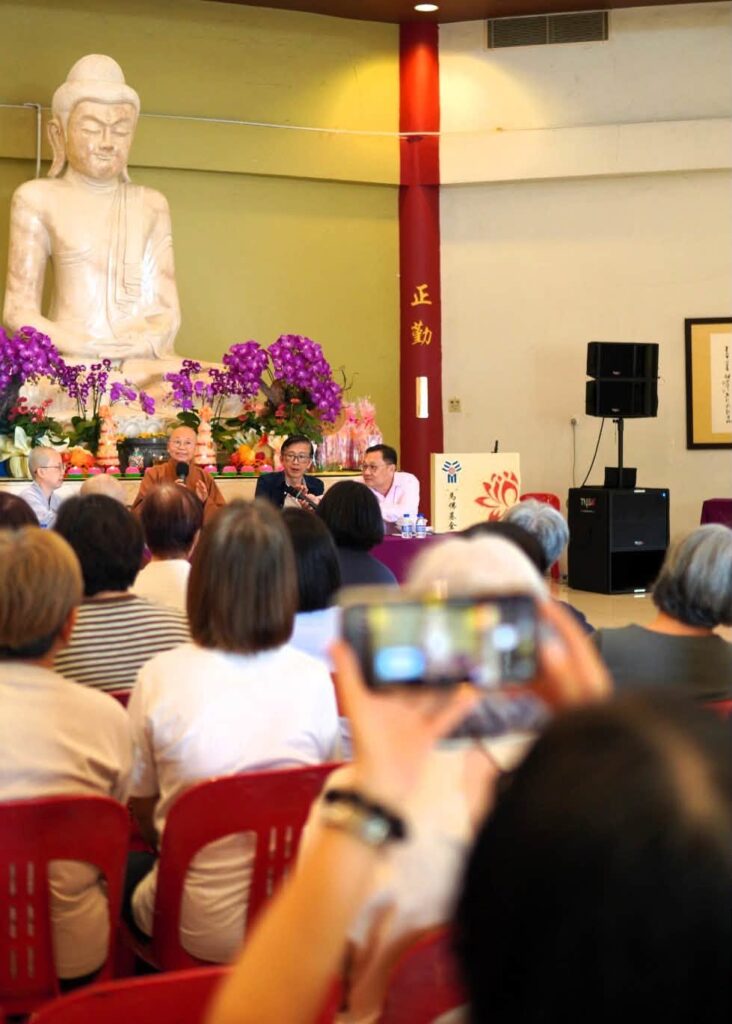
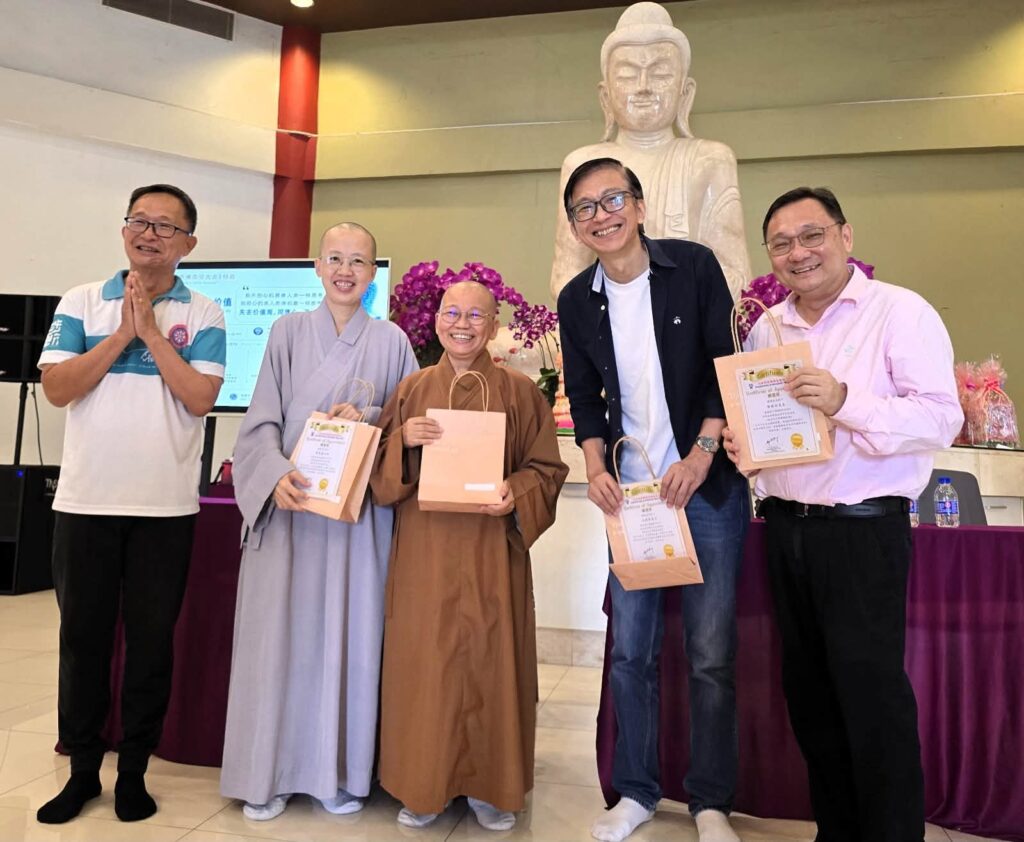
On July 12, 2026, I had the privilege of participating in the forum “Buddhist Values in the Age of AI” at Bodhi Park, Shah Alam. Together with moderator 曾毓林先生, panelists 妙赞法师 and 常藻法师, we engaged in a thought-provoking discussion that sparked many meaningful insights.
Before the event, I made it clear to the organizers that I am a free thinker and not in a position to speak on behalf of Buddhism. Their response surprised me: “That is precisely why we invited you—we wanted to hear an independent third-party perspective.”
As it turned out, my concerns were unnecessary. The Buddhist perspectives shared by 妙赞法师 and 常藻法师 resonated remarkably well with my own views on how humanity should navigate the AI era. Despite approaching the topic from different directions, our ideas converged naturally, resulting in a seamless and enriching dialogue.
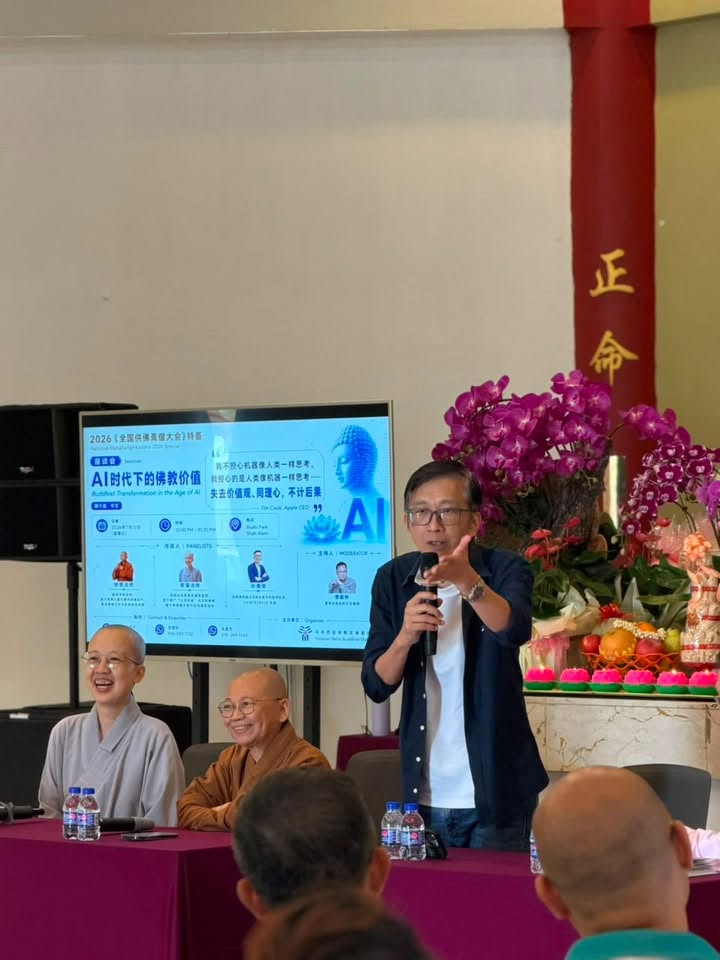
Harnessing AI as a Force for Education
妙赞法师 believes that we should not resist the AI revolution. Instead, we should learn to understand and use AI wisely; otherwise, we risk becoming controlled by the very tools we create.
She illustrated this through the “Youth Podcast” initiative, launched in 2024 to support young people who aspire to become YouTubers by helping them build meaningful, high-quality content channels. As participants used AI to create content based on the Dhammapada, they not only developed clearer communication skills but also deepened their understanding of Buddhist teachings through researching different Buddhist traditions.
妙赞法师 emphasized that AI is, ultimately, just a tool. No matter how extensively it is trained in Buddhist scriptures, it possesses no heart, cannot cultivate itself, and can never replace an authentic spiritual teacher.
Rather than fearing AI’s growing presence, she encouraged us to consider how we might guide its development with the right values so that technology can become a vehicle for education and moral cultivation. She also challenged modern education itself, suggesting that instead of blaming children for spending excessive time online, we should ask whether we have truly given them enough freedom to grow, explore, and discover their own potential.
Keep Money in Your Pocket, Not in Your Mind
常藻法师 compared AI to money: it is something we should make good use of, but never become attached to.
She quoted a simple yet profound principle:
“Keep money in your pocket, but not in your mind.”
She believes the same mindset should apply to AI.
Although AI possesses an immense amount of knowledge, it cannot awaken the purity of the human mind. The future, she reminded us, will always be created by human beings.
She further explained that genuine growth comes from lived experience. Eating, for example, is not merely about satisfying hunger—it is about experiencing life itself. If we rely solely on knowledge without putting it into practice, we become trapped in the paradox of “knowing, yet failing to do.”
While AI can save us valuable time, that time should be invested in inner cultivation rather than creating even greater dependence on AI. Moreover, the respect, humility, and personal interaction between teacher and student remain irreplaceable in the transmission of Buddhist wisdom. These are values AI will never be able to replicate.
Don’t Outsource Your Soul to Machines
When it was my turn to speak, I began with a straightforward observation:
“The greatest danger of the AI era is not that machines become more like humans, but that humans become more like machines—losing our creativity, imagination, and capacity for independent thought.”
I compared AI to “blowing water”(“吹水”;聊天)—a colloquial Cantonese expression meaning casual conversation or chatting. Like a friend, AI can give inaccurate or incomplete answers when it lacks sufficient information. That is why we must approach AI with verification, critical thinking, and healthy skepticism rather than accepting everything it tells us at face value.
This echoed 常藻法师’s earlier point about the gap between knowing and doing. AI can generate an endless supply of information, but it cannot produce wisdom. Wisdom emerges only when knowledge is combined with personal experience, refined through action and reflection—something AI simply cannot achieve.
I went on to argue that the real challenge is not how intelligent AI becomes, but whether people begin outsourcing their thinking, judgment, and even life decisions to it.
In every situation, we must know when to leverage AI, when to question its recommendations, and when to return to human values, responsibility, and moral judgment.
Preserving the Human Qualities That Cannot Be Replaced
Toward the end of the discussion, I proposed that three core capabilities will become indispensable in the AI era:
- Discernment — the ability to evaluate the credibility and value of information.
- Judgment — the ability to make sound decisions amid complexity and uncertainty.
- Learning Agility — the ability to continuously learn, adapt, and renew one’s understanding.
Ultimately, these three abilities serve one common purpose:
To ensure that, even as our tools become increasingly powerful, human beings retain the autonomy that makes them truly irreplaceable.
The AI era is simply another chapter in humanity’s technological evolution. No matter how advanced technology becomes, it can never replace the spiritual refuge found within the human heart.
In a future where algorithms cannot calculate compassion and code cannot program enlightenment, returning to inner cultivation may well be humanity’s ultimate safeguard against becoming dehumanized.
Below is the coverage of Sin Chew Daily on the event:
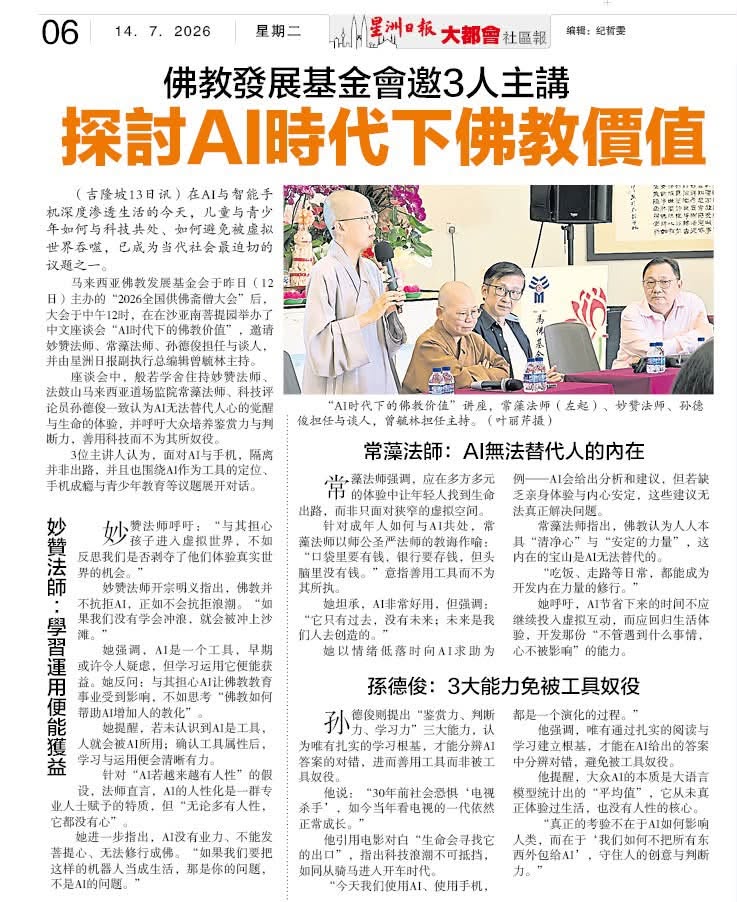
The online version: https://metro.sinchew.com.my/news/20260713/metro/7667008